'Follow humbly wherever and to whatever Nature leads, or you shall learn nothing'
T. H. Huxley, Letters, 1860
COURSES IN THE HUMANITIES
ENGLISH LANGUAGE and LITERATURE: Beginning in the 16th century with the works of Francis Bacon, students in this course will read, discuss, and write upon English and American essays, poetry, short stories, and miscellaneous extracts down to the early 20th century. In addition, they will study the fundaments of the English Language itself, concentrating principally on vocabulary/diction; grammar; etymology; punctuation; syntax; orthography/orthoëpy; and the parts of speech. Students will be provided with all of the required reading material.
ETYMOLOGICAL GREEK and LATIN: Given that roughly eighty percent of the English language is comprised of the ancient languages of Greece and Rome (together with their various descendants), this course will delve into and examine said languages primarily with a view to increasing students’ comprehension of English in general. Study also involves the investigation of Anglo-Saxon (the scaffolding, as-it-were, of English), as well as that language from the Indus Valley referred to as Proto-Indo-European or ancient Sanskrit, which was the progenitor of most major languages thereafter.
PHILOSOPHY: We regard Philosophy as an Art, and certainly as a Humanities subject, rather than the ‘science’ that those in the last century have tried to turn it into, and which the ancients would hardly recognise. Our study, then, begins with Thales of Miletus in the 5th century B.C. in Greek Ionia, he being widely considered the father of Western Philosophy to whom is ascribed the first true enquiry into the archê : the primary or originating substance/principle of all things, as well as the first to posit the immortality of the human soul. From here we ponder the pre-Socratic thinkers and thenceforward naturally alight upon Socrates himself, Plato, Aristotle, and those myriad others who succeeded them, thereafter concluding the ancient period with the principle philosophers of Rome and on down to Lucretius and Plotinus. We then chronologically investigate the thought of this field of study from the Neo-Platonism of the 3rd – 7th centuries A.D., through the Middle Ages, the Renaissance, and the Enlightenment, culminating in the early 20th century with Logical Positivism.
COURSES IN MATHEMATICS
ALGEBRA I and ALGEBRA II. This fundamental high school mathematics course will offer students all the needed coursework for its credit. In this course students will be led to experiences that help them understand the whys of algebraic logic as well as applications of algebra in some daily life settings. The aim of mathematics is to help students find truth and clear thinking, through their own development of mathematical and algebraic thinking. This course will rest on this foundation.
GEOMETRY (EUCLIDIAN) This fundamental high school mathematics course will offer students all the needed coursework for its credit. In this course students will be led to experiences that help them understand the whys of geometric thinking as well as applications of that thinking in some daily life settings. The aim of geometry is to help students find truth and clear thinking, through their own inner problem solving, and spatial reasoning, this course will rest on this foundation.
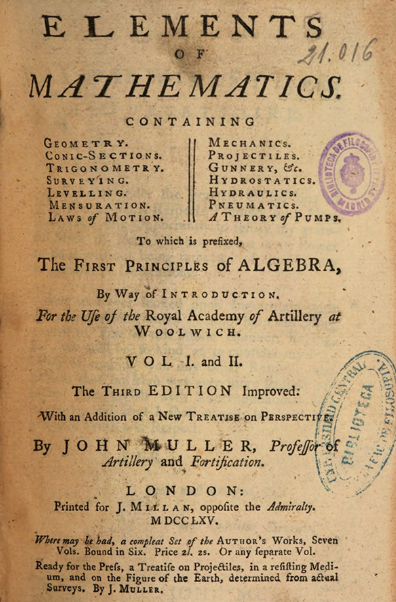
THE HISTORY of MATHEMATICS and of MATHEMATICIANS: It would stand to reason, we believe, that any study of Mathematics would include at least a partial or momentary disquisition into the mathematicians themselves and the culture (or logos if you will) of the discipline in and of itself, but alas!, this we rarely, if ever, see. The very word mathematics is derived directly from the ancient Greek word mathesis, which means ‘learning’ or ‘knowing’, and inherently has nothing at all to do with numbers: hence the word polymath, which we all know means ‘one who is learned in many different subjects’. This Symposium course therefore treats more so of mathematicians as human beings and the demesne of learning to which they were steadfastly devoted, and withal peers into their mathematical endeavours with a view to seeing them as the compelling, engaging, and living works that they were/are.
COURSES IN HISTORY and THE SOCIAL SCIENCES
MEDIÆVAL EUROPEAN HISTORY: Leaving the early church and patristic fathers of the first few centuries A.D., as well as the final few hundred years of the Roman Empire, we will embark upon the study of the Middle Ages in the way of the general culture of Europe down to the advent of the Renaissance in the 13th century. This includes, among other topics, the Byzantine Empire; the feudal system; the monasteries; Abélard and Scholasticism; the emergence of the University; the crusades; literature; the bubonic plague; the Inquisition; Arabic Aristotelianism and the safeguarding of ancient Greek texts in the Levant; music; painting; and Gothic architecture.
THE RENAISSSANCE: This course begins in 13th century Italy with the poetry of Dante and later with Petrarch's discovery of the letters of Cicero (106 - 43 B.C.) and the Institutiones of Quintilian (35 - 96 A.D.), said discoveries being a colossal impetus to the quest for the manuscripts of ancient Greece and Rome that engrossed the Italian humanists throughout the entire era. We therefore examine Humanism in general and its immense influence throughout Europe, together with the vernacular tongues that then began to emerge out of Latin (Italian, French, etc.), the inception and significance of the printing press, the continuing progression of the Universities, the dawning of 'modern' astronomy (Copernicus, Galileo, Kepler, et al.), maritime exploration, and of course the Arts.
WORLD HISTORY and GLOBAL ISSUES: Approaching the study of world history more so from a longitudinal / co-chronological perspective, rather than the traditional modular method, this course begins in so-called 'pre-history' roughly 40,000 years ago with the earliest known human cave paintings from the island of Sulawesi. Studies then peer into the intervening period between said paintings and the beginnings of what we call civilisation, exploring along the way the ages of stone, bronze, and iron, until (and coeval with) the ancient civilisations of Mesopotamia, Babylon, Egypt, Persia, Greece, and Rome come into view. Moving onward, investigations will concentrate on the social, cultural, economic, technological, militaristic, migrationary, and at times political elements (among others) of the principal nations and peoples of the world down to our own time.

SYMPOSIUM COURSES
Additional shorter classes will be offered in due course throughout each academic year.
PSYCHOSOPHY: This course will offer students knowledge of the life of the human soul. Through timeless and reputable texts, role playing, interactive exercises and discussions, and lectures this course will help students experience and learn certain basic facts and realities of the psyche, the human soul. Coursework will also include regular written assignments and projects, and will prove invaluable for those wanting to understand the human being and for those also wanting help in navigating adolescent life as one.
EPISTEMOLOGY: As an important sphere in the over-all realm of Philosophy, this course will offer students a greater understanding of the process of cognition, or knowing, itself. A now practically forgotten discipline, Epistemology presents to its students windows into a uniquely human process (our ability to know), and the thinking behind it - few human faculties are so fundamental and so little understood. Students will work with texts, discussions, directed exercises, and lectures to gain this basic and most important understanding. Coursework will also include regular written assignments.
THE HISTORY of LEXICOGRAPHY: What may at first glance appear to be a rather recondite, or at least a specialist area of study, yet direct and protracted experience with former students has shown otherwise; that is to say, a survey of dictionaries, lexicons, words, the history of etymology, and those other studies attendant thereto has been seen to be of more than a little interest. Starting with the word-lists of ancient Mesopotamia from the second millennium B.C., we travel downward in time to Cawdrey’s A Table Alphabeticall of 1604, to Johnson’s Dictionary of 1755, and of course stopping to pay a visit with Webster’s Dictionary and its many subsequent versions and republications. This survey will culminate with an inspection of the monumental Oxford English Dictionary and its most wondrous history.
HISTORICAL STUDIES in THEOLOGY and RELIGION: Given that Christianity has been and is the predominant religion in the Western World, this course seeks not to indoctrinate students thereinto, yet rather such is an investigation of this religion and its philosophy (theology) on historical principles only. Thus, we begin in Greece in the fourth century B. C. with Platonism and its direct influence on Christian thought. Thereafter we trace the evolution and formation of Christianity itself through the Septuagint and the Bible; Gnosticism and the Neo-Platonists; St. Paul, Augustine, Anselm, and Aquinas; the advent of the Papacy in Rome; and down to the Protestant Reformation of the early 16th century, alighting here and there to contemplate such religious phenomena as monasticism, scholasticism, and the Inquisition.
THE TUTORS
David Axelrod Bachelor of Arts in Environmental Studies, Western Washington University; Teacher of Anthroposophy, The School for Anthroposophy; Homeroom Teacher, The Sunfield Waldorf School; Grades Education Teacher, The Micha-el Institute; Former Mathematics Teacher, Bright Water School; Academic Support Member, Port Townsend High School; Founding Teacher, The School for Tomorrow.
Geoffery D'Onofrio English Language and Literature, The University of Washington; English Literature Certificate, The University of Cambridge; Philosophy of Mind Certificate, The University of Oxford; Contributory and Appeals List Reader for The Oxford English Dictionary; Former Language Consultant, The Port Townsend Shakespeare Society; Independent Tutor in English Literature, Philosophy, Classical Civilisation, Italian, and Mediæval History in Port Townsend; Contributor and Editor, Miscellae Humaniores; Editor, The Concise Dictionary of -isms and -ologies.
Jeremiah Cornwall Morgan Former Director, The Port Townsend Shakespeare Society; Theatre Immersion Teacher, Swan School, Port Townsend; Former Teacher of Shakespearian Drama, The Port Townsend Public School District; Member Emeritus, The Ilythian Society.
Larling Cottage
Port Townsend, Washington
E-Mail: tgacademy@juno.com
Salvatae Athenae Nostrae